Showing posts with label Movie I Like. Show all posts

Saturday, January 19, 2008

DIANE (1956) ***

Diane (1956)
Starring: Lana Turner, Pedro Armendáriz Director: David Miller .

At Castro theatre A couple week a go I had a chance to see one of Lana Turner least well-known MGM movie DIANE . It’ not suppose to be on schedule . But the Print of Elisabeth Taylor “the VIP” has a technical problem . So they replace DIANE instead .

Lana Play Diane de Poitiers who was a noblewoman and a fixture at the courts of Francis I and Henri II of France. She became notorious as the latter's favorite courtesan, though she was 18 years his senior.

Also in the movie Roger Moore (one of his pre James Bond ) was a good choice of Henry II . I have to admit that the movie is a lot better than I thought . It show that My girl Lana can really act. Notable mention was a beautiful score by Miklos Rozsa and a wonderful costume by Walter Plunkett (Gone with the wind , Raintree Contree ) I mean just only costume is already worth the ticket.

DID YOU KNOW??

  • DIANE was Lana Turner's last film on her MGM contract.
  • DIANE was a property that MGM had been holding since the 1930's, when they had purchased it for Greta Garbo


Monday, September 24, 2007

'Three Coins in the Fountain'


'Three Coins in the Fountain' is an old-fashioned romantic film about three American secretaries that throw their coins into a fountain in Rome and hope for romance.... The film follows three women on their hunt for husbands in Rome. There ‘s nothing much about the story (which is not bad at all) The best thing about this movie is the beautiful cinematography of Italy and a popular title song sung by Frank Sinatra. All major stars at the time including Very Gay Clifton Web, Beautiful Jean Peters and Dorothy Mcguire ,French and Italian heartthrob Louis Jordan, Rossano Brazzi this is Maggie Mcnamara second movie right after her Oscar performance in “the Moon is blue”

Three Coin in the Fountain is No.10 gross movie in 1954 Directed by Fox own house Director Jean Negulesco ( Humoresque , Johnny Belinda, Titanic, How to Marry Millionaire ,Daddy Long leg,The Best of everything) Nominated for 3 Academy award including Best Picture and won for Cinematography and Original Song.


DID YOU KNOW?? *

  • The working titles of this film were We Believe in Love and There's No Place Like Rome. Before the picture's opening credits, Frank Sinatra, who is uncredited, sings the title song over a montage of scenic shots of Italy and Rome's many fountains. The song, which became one of Sinatra's standards.
  • According to March 1953 Hollywood Reporter news item, the picture was originally scheduled to be shot in black and white, and Barbara Stanwyck, Gene Tierney, Vittorio Gassman and Jeanne Crain were set to co-star with Clifton Webb and Louis Jourdan.
  • According to news items and studio publicity, the majority of the film was shot on location in Rome, Venice and the village of Merano in Italy. Studio publicity noted that some interiors had to be shot at the Twentieth Century-Fox lot in Los Angeles, which offered better lighting.
  • Fox produced another version of Secondari's book, entitled The Pleasure Seekers,Also directed by Jean Negulesco and starring Ann-Margret, Carol Lynley and Gene Tierney
* From AFI Library


Tuesday, August 14, 2007

Joan crawford is Harriet Craig


Joan Crawford was Letty Lynton ,Sadie McKee, Mildred Pierce,Daisy Kenyon but I have a feeling that Harriet Craig might be the character that close to herself the most.

Harriet is a woman who leaves a successful career to enjoy domestic bliss with electrical engineer Walter. A thoroughly selfish woman who prizes her house and her possessions . She's one of those women who is going to “have it all”--but in her own special way.


Harriet Craig is the third film version of George Kelly's Pulitzer Prize-winning play Craig's Wife. “Directed by Vincent Sherman, **Who just directed her previous film The Damned Don't Cry . Sherman was the first, but not the last, to see the similarities between Harriet Craig and Joan Crawford. As he recalled in his 1996 autobiography, Studio Affairs, "I realized that in many ways, she was the embodiment of Harriet Craig...in her obsessive attitude toward her home; her distrust of men [because she had been abandoned by her father] and her desire to control; her power of manipulation; and her concept of the proper way for a man to behave toward his wife."


Crawford's performance in Harriet Craig earned her some of her best reviews since Mildred Pierce. the New York Herald Tribune agreed."The film gives authentic movie star Joan Crawford an opportunity to command the camera's attention through an authentic star role. She remains, as always, a stylish performer in her clear and forceful characterization....Her vehicle may be somewhat laborious but it is steady enough to carry Miss Crawford's act”*
* TCM.com

Thursday, July 12, 2007

Barefoot in the park & Cactus Flower


In a past twodays I ‘d watch a nice comedy that happen to directed by the same director Mr. Gene Saks

Barefoot in the Park (1967)


Based on Neil Simon's 1963 play of the same title, it focuses on newlyweds Corrie and Paul Bratter (Jane Fonda and Robert Redford) and their adventures living in a tiny fifth-floor walk-up apartment in a Greenwich Village brownstone. Stuffed-shirt Paul is a hard-working young attorney just starting his practice, while spontaneous bride Corrie is determined to create a romantic environment in one room with no heat, a hole in the skylight, and oddball neighbors.

The title refers to Paul's becoming drunk, throwing caution to the wind and running barefoot in Washington Square Park in response to his wife's repeated complaints about his sober and cautious demeanor.

...Mildred Natwick (who actually the best thing in the movie) reprises her stage role as the bride's mother, Charles Boyer is featured as the eccentric upstairs neighbor, and Herb Edelman appears as a telephone installer.

Natwick was nominated for the Academy Award for Best Supporting Actress, Fonda was nominated for a BAFTA as Best Foreign Actress, and Simon received a nod from the Writers Guild of America.


link
Read TCM article of Barefoot in the park


Cactus Flower (1969),

the film version of a Broadway romantic farce, was a personal triumph for its three stars: comic veteran Walter Matthau; dramatic star Ingrid Bergman in a rare comic turn; and television star Goldie Hawn, in her film debut, holding her own with her seasoned co-stars, and winning an Academy Award as Best Supporting Actress. The "cactus flower" of the title is Bergman, as Stephanie, a mousy dental assistant secretly in love with her boss, Matthau, a womanizing bachelor. When the dentist enlists her help to get rid of his much-younger girlfriend, Hawn, by pretending to be his wife, the prickly Stephanie blooms like the proverbial title plant.


Read full TCM Article of Cactus Flower

Monday, February 19, 2007

The Heiress is on DVD

One of my Favorite movie is now available on DVD
The Heiress [DVD] (1949)
Olivia de Havilland won an Oscar for her portrayal of a plain spinster romanced by a handsome but poor young man (Montgomery Clift) her emotionally abusive father believes to be an unscrupulous fortune hunter eyeing the money de Havilland inherited after her mother died. William Wyler's adaptation of Henry James' novel "Washington Square" also stars Ralph Richardson, Miriam Hopkins.

Academy Award®
Winner: Best Actress (Olivia de Havilland), Best Interior Decoration (B&W), Best Score (Drama or Comedy), Best Costume Design (B&W)
Nominee: Best Picture, Best Supporting Actor (Ralph Richardson), Best Director (William Wyler), Best Cinematography (Black and White)

Friday, February 09, 2007

The rains Came (1939)

It's been raining here in San Francisco for a couple days. I can't help but thinking about a movie that I really like. The rains Came (1939) Staring Tyrone Power , Myrna Loy and George Brent. Indian aristocrat Tyrone Power returns to his home province after studying medicine in America to help the needy and sick, and becomes romantically involved with married English socialite Myrna Loy. The couple finds their love and courage tested when an earthquake and flood devastate the area and a subsequent malaria epidemic threatens all,

Set at the beginning of monsoon season in the fictitious state of Ranchipur, India, The Rains Came is filled with sahibs, memsahibs, Indian royalty, servants in turbans, high-caste Indians in saris and tuxedos, elephants, monkeys, British Empire dignitaries, and American missionaries.


The Rains Came released during one of the richest years in cinematic history (ten 1939 films got Best Picture nominations), is best-remembered for its spectacular special effects, Nominated for five academy award including Best Cinematography (Black and White), Best Art Direction--Set Decoration, Best Sound, Best Original Score, Best Editing and won f0r Best Special Effects ( beat out both Gone with the Wind and The Wizard of Oz for the Oscar.)

Take a look at the earthquake clip here and see how special effect still impressive .


Did you know??

  • Initially budgeted at $2,500,000, an additional $100,000 was added to film a new ending. $500,000 was allotted for the sets, and $500,000 for the flood and earthquake scenes. 350 grips, carpenters and laborers worked for more than a month on those scenes.

  • To create the flood effects, a 50,000-gallon tank of water was built on a studio sound stage.

  • Bert Glennon started the movie as director of photography, but became ill and was replaced by Arthur C. Miller, who received the onscreen credit.

  • Modern sources list Harry Revel as co-writer of the title song; however, he is not listed on the published sheet music or in the ASCAP database for the song.

  • This movie was a monumental undertaking for the studio. Of the 100 shooting days, almost half were spent filming the man-made rain and floods, for which 33 million gallons of water were used.

  • The Ranchipur of novelist Louis Bromfield was built on 18 acres of the back lot. The maharajah's palace, which was wrecked room by room in the earthquake, cost $75,000. The breaking of the dam was shot in two nights using 14 cameras.

  • The studio had difficulty finding enough light-gray, black-faced monkeys for the shoot, so the makeup artists actually made up more common-looking monkeys to "fit the part".

  • The first movie to win an Oscar for Best Visual Effects.

Thursday, February 01, 2007

WILL SUCCESS SPOIL ROCK HUNTER?


Will Success Spoil Rock Hunter? is part of The Jayne Mansfield Cinema Classics Collection , three off-beat films that once again put a spotlight on one of Hollywood's loveliest starlets. The three films also include The Girl Can't Help It , and The Sheriff of Fractured Jaw.


Saturday, January 27, 2007

The Ghost And Mrs. Muir ****


In 1900, strong-willed widow Lucy Muir goes to live in Gull Cottage by the British seaside, even though it appears to be haunted. Sure enough, that very night she meets the ghost of crusty former owner Captain Gregg...and refuses to be scared off. Indeed, they become friends and allies, after Lucy gets used to the idea of a man's ghost haunting her bedroom. But when a charming live man comes courting, Lucy and the captain must deal with their feelings for each other.

In 1945, Twentieth Century Fox bought the film rights to the
novel, which had only been published in Britain at that time. The film
was released in May, 1947, and starred Rex Harrison as "Captain Daniel
Gregg" and Gene Tierney as "Lucy Muir."

Here is the Ghost and Mrs. Muir FAQ. that I found on line at http://www.faqs.org/faqs/tv/ghost-and-mrs-muir/faq/
  • WHO (OR WHAT) IS "THE GHOST?"

The ghost is Captain Daniel Gregg, an irascible but charming sea
captain who died prematurely and tragically one night when he
accidentally kicked over the gas heater by his bedside in Gull
Cottage.

  • WHO IS "MRS. MUIR?"

Mrs. Muir is Carolyn Muir, a young widow and the current tenant of
Gull Cottage. She has two children, Candace and Jonathan, and a
wire-haired terrier, Scruffy. The family also includes Martha, the
able-bodied housekeeper.

  • WHEN DID CAPTAIN GREGG DIE?

November 13, 1869, according to the episode "Surprise Party." He was
supposedly 39 at the time, giving his birth in 1830, according to that
episode. I use the term "supposedly" because the show was rather
inconsistent in their use of dates, particularly in the second season.
This particular date, November 18, 1869, may or may not be accurate as
is the case with his date of birth.

  • WAS THE CAPTAIN A PIRATE?

Only of women's hearts, I'm afraid! We can assume that the Captain was
a Naval officer as evidenced by his reference to participating in The
Battle of Vera Cruz in "Hero Today, Gone Tomorrow," his naval dress
uniform worn in "The Medicine Ball" and "Wedding Day?????," the quote
"I can't argue with him. He's an Admiral. He outranks me," referring
to Admiral Snedaker in "Chowderhead," and the long chain of command
required to get Martha's brother-in-law's posting changed in "Martha
Meets The Captain."

  • WHY IS THE CAPTAIN HAUNTING GULL COTTAGE?

The transition from here to the over there is affected by several
things including the circumstances of the person's death and his state
of mind at the time prior to and at the time of death. Oftentimes, a
ghost will remain near the place where his death occurred if it was a
sudden or tragic passing, or near a person or place to whom he was
emotionally attached. In the Captain's case, perhaps he still hangs
around Gull Cottage because he spent his life savings on the place and
intended it to be a home for retired seamen. He stubbornly refuses to
give up ownership of the cottage because he cannot bear to entrust its
care to his blundering nephew, Claymore! True romantics, however,
would like to believe that Carolyn and the Captain were destined to
meet and he was hanging about Gull Cottage waiting for her to show up!

Did you know??

  • The Ghost and Mrs Muir was rank No.73 at AFI's 100 YEARS...100 PASSIONS
  • studio production chief Darryl F. Zanuck originally wanted John M. Stahl to direct the film. In a 24 Jun 1946 memo to producer Fred Kohlmar and screenwriter Philip Dunne, Zanuck expressed his admiration for Stahl's work on Holy Matrimony (see entry below), a film he felt had "exactly the same type of English humor and sentiment" as The Ghost and Mrs. Muir .
  • Zanuck went on to endorse Norma Shearer for the role of "Lucy." "Many people, including [Twentieth Century-Fox president] Spyros Skouras, believe that Norma Shearer has one great picture left in her yet," he wrote, "and that she would make the same comeback that Joan Crawford made last year [in Mildred Pierce

Sunday, January 21, 2007

Cat fight

Old Acquaintance (1943) Bette Davis and Miriam Hopkins were schoolgirl chums. With former leaving home town to carve literary career, while latter settles to happy marriage .Davis returns for lecture and, as guest of former pal, finds her with child and writer of hot sexy novels which she agrees to read and submit to publishers.


To their surprise, Millie's book becomes a bestseller, and a decade later she's one of the most successful authors in America, easily eclipsing Kitty's more highbrow work.


Behind the scene.

Miriam Hopkins had appeared memorably in Davis's biggest hit of the '30s, The Old Maid (1939), despite off-screen fireworks between the stars, so they offered the role to her. Then she made so many demands -- $5,000 a week salary, complete control over her hair, makeup and costumes.

Memories of Hopkins' off-screen antics during The Old Maid threw Davis and Goulding, who had directed the film, into a panic.... When Hopkins started making more demands, Goulding had a heart attack, so the studio replaced him with rising young director Vincent Sherman.

Hopkins immediately started pulling every trick she could to upstage Davis and throw her off.... Finally the day came to shoot the characters' big showdown, in which Davis was supposed to shake Hopkins viciously and then throw her into a chair.... (click play to watch)


At Goulding's urging, Davis had agreed to cast screen newcomer Gig Young as the naval officer Kit loses to her rival's adult daughter. Although both were married, and Young was five years younger, he and Davis carried their on-screen relationship into their private lives with a series of late-night trysts in her dressing room.

Did You Know??

Bette Davis personally requested the casting of Norma Shearer in the role of Mildred Drake. Shearer refused the role and the part went to Miriam Hopkins.

Later remade as Rich and Famous (1981) with Candice Bergen and Jacqueline Bisset.

Monday, September 11, 2006

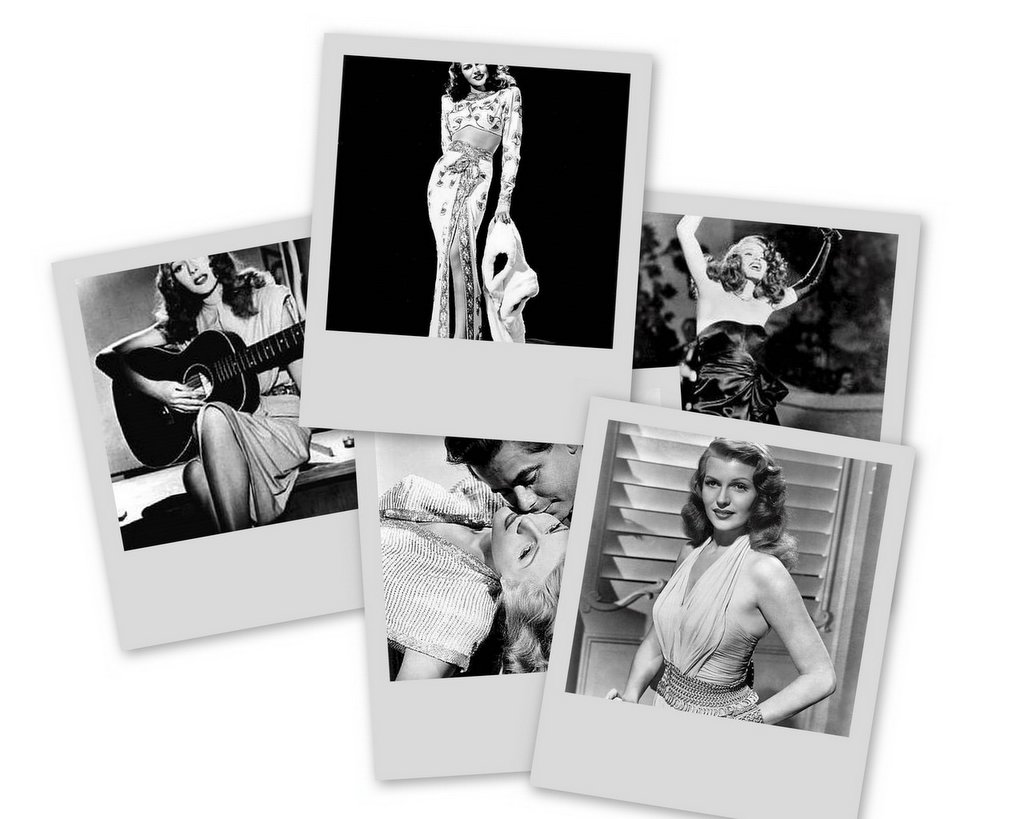
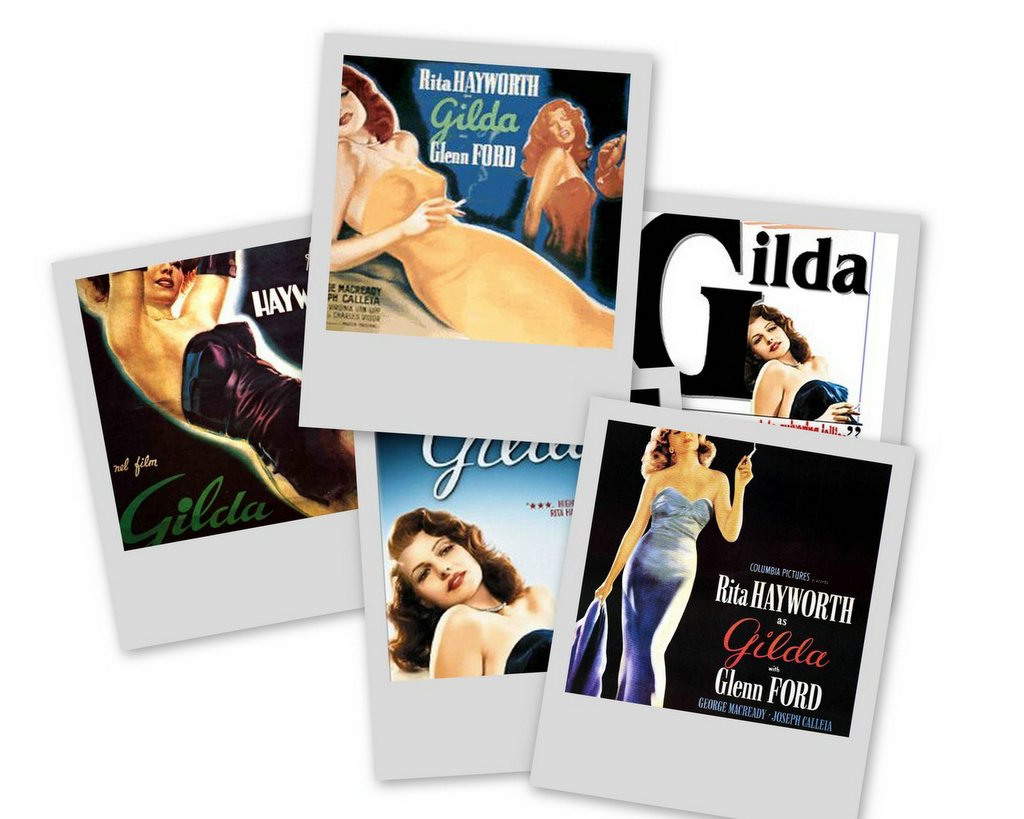
Gilda... What a slut!!!


"Hate is a very exciting emotion. Haven't you noticed? Very exciting. I hate you too, Johnny. I hate you so much, I think I'm gonna die from it. Darling... (Gilda and Johnny kiss) I think I'm gonna die from it."
Rita Hayworth as Gilda

Did you Know???

  • In the scene where Gilda is brought back to Argentina by Tom, she slaps Johnny hard across both sides of his face. In reality, Rita Hayworth's smacks broke two of Glenn Ford's teeth. He held his place until the take was finished.
  • The strapless black satin gown that designer Jean Louis created for Rita Hayworth's "Put the Blame on Mame" number was based on the dress (with straps) worn by Madame X in the famous painting by John Singer Sargent. The painting, done in 1884, hangs at the Metropolitan Museum in New York.
  • Gilda was such an enormous financial success for Columbia Pictures that Rita Hayworth's agent, Johnny Hyde, demanded that studio chief Harry Cohn give his client a share of profits for subsequent pictures. Cohn refused, but when Hayworth called in "sick" for several days during production of her next film, Down to Earth, Cohn relented. Hayworth formed the Beckworth Corporation to collect twenty-five percent of the net profits from the remaining films on her Columbia contract.
  • Rita Hayworth was six months pregnant with daughter Rebecca Welles when shooting commenced (Hayworth gave birth just one week after production ended). Hayworth's costuming was designed to help hide her condition (note the large waistline bow on her black dress in the "Put the Blame on Mame" number, for example). Often during the movie Hayworth is frequently seen only from the waist up, behind other cast members or props, or she is holding in front of her a piece of wardrobe (a fur coat, etc.).

Monday, August 28, 2006

Pal Joey (1957)

After Harry Cohn saw the success of the Gene Kelly/Rita Hayworth team in the musical Cover Girl (1944), the two were promised this film. Sadly, it took another 15 years for it to reach the screen, and by that time Kelly (whose star-making role was in the original 1940 Broadway production) was bound to MGM and Hayworth was given the role of the older woman, with 'Kim Novak' now playing the younger woman.

It features three great (Richard) Rodgers and (Lorenz) Hart numbers, one for each of its leads: Sinatra sings "The Lady is a Tramp", Hayworth dubbed by Jo Ann Greer got "Bewitched, Bothered and Bewildered" and Novak (dubbed by Trudy Erwin) does "My Funny Valentine".

In the film, the character of Joey was changed from a dancer to a singer and the setting was changed from Chicago to San Francisco. In addition, Joey's character was softened by the inclusion of the last act in which Joey is reconciled with "Linda." Various locations throughout San Francisco were utilized for the film, including Telegraph Hill, according to a May 1957 Variety news item.

Pal Joey marked the only production of Essex-George Sidney Productions, a production unit formed by George Sidney and Frank Sinatra. Pal Joey was nominated for the following Academy Awards: Best Art Direction, Best Costume Design, Best Film Editing and Best Sound Recording. Sinatra won the Golden Globe Award for Best Actor for his performance in the film.

Hard (on) Fact..
- In the scene where Frank Sinatra sings "The Lady is a Tramp" and then dances with Rita Hayworth, there is a moment where she is supposed to say a line. However, she appears to stop herself and smile instead. This is because she realized during the take that Sinatra had an erection, and her surprise caused her to miss the line. However, her take was considered so priceless that it was left in. You can also see Sinatra strategically using the fur coat to cover his lower body as he exits the scene.

Tuesday, August 15, 2006

TNT


Johnny Eager

"TNT - Taylor 'n Turner - Together They're Terrific!" So went the ad campaign for MGM's Johnny Eager (1942). And indeed they were. Robert Taylor and Lana Turner, two of the most beautiful faces ever to appear onscreen, were dynamite in their one and only film together.

Their steamy onscreen chemistry carried over to real life, as the married Taylor fell hard for the sexy 21-year old blonde bombshell. In her autobiography, Turner admits to a romance, but not an affair. She says she "flirted," but she didn't want to be responsible for breaking up Taylor's marriage to Barbara Stanwyck. Taylor, however, told his wife that he was in love with Turner and asked for a divorce. Turner says she then cooled the flirtation, and Taylor stayed married. Whatever the truth, the attraction between the two stars only helped the film.

Taylor and Heflin recreated their roles for a Lux Radio Theatre broadcast on 21 Jan 1946. Susan Peters portrayed "Lisbeth" in the radio production, and Cy Kendall, who portrayed "Bill Halligan" in the film, portrayed "Marco." In an article in Saturday Evening Post entitled "The Role I Liked Best," Heflin cited Johnny Eager as his favorite performance.

As for exorcising Robert Taylor's glamour-boy image once and for all...well, as Wanda Hale gushed in the New York Daily News, "Taylor makes as handsome a gangster as you'd find if you'd go through the underworld with a fine-tooth comb." Still, glamour or not, Taylor's performance Johnny Eager is one of his best.

Wednesday, July 26, 2006

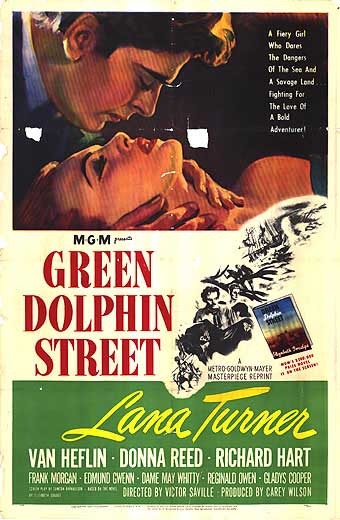
Green Dolphin Street


Based on a novel by Elizabeth Goudge, Green Dolphin Street is a story about, as one critic phrased it, "a slip of the pen." A fugitive sailor, hiding out in New Zealand, writes to his faraway sweetheart and asks her to be his bride. The problem is, he's drunk while writing the letter and addresses it to the wrong woman, the sister of his intended, played by Lana Turner. The MGM starlet was riding high after the previous year's smash hit, The Postman Always Rings Twice (1946), and was given top billing.

As for Turner's other co-stars in Green Dolphin Street, Donna Reed was cast as her sister, Marguerite, and newcomer Richard Hart played the man of their affections. Reed, having earned acclaim for It's a Wonderful Life (1946), would go on to win an Oscar for her performance as an ambitious prostitute in From Here to Eternity (1953).

Did you Know??
  • Katharine Hepburn was slated for a starring role in the film.
  • Reed, who initially did not want to play the role of "Marguerite" because she thought that Lana Turner was prettier and that audiences would not believe that "William" would chose her over Lana, is quoted as saying, "Lana's gorgeous. If I play that part, it'll ruin the picture."
  • According to a 1947 article in Look magazine, which referred to this picture as a "$3,000,000 film," $500,000 was spent on the earthquake scene alone.
  • Green Dolphin Street received an Academy Award for Best Special Effects, and was nominated for Best Sound Recording.
  • Lana Turner and Van Heflin reprised their roles in a Lux Radio Theatre broadcast on 19 Sep 1949.

Wednesday, June 21, 2006

Leave her to Heaven ****1/2

Leave her to heaven was one of the fabulous movie I've seen lately. It's one of the rare noir type that has a color in it . It also one of the most beautiful orgasmic color cinematography every been in a history of cinema.

" Leave Her to Heaven shares a closer kinship to Michael Powell’s British-made Black Narcissus (1947), where color similarly acts as a breathing character amidst turgid, denied emotions of lust, covetousness, dislocation, and death. If it sparks a memory of Douglas Sirk’s lush dramas, there’s a reason. Stahl directed Imitation of Life and Magnificent Obsession in the 1930s. Sirk remade both in the 1950s."

"The success of Leave Her to Heaven belongs foremostto Gene Tierney. She was much more than Hollywood’s most beautiful overbite. She had the preternatural ability to be alluring and icy at the same time; she could change emotional colors with magnificent yetsubtle clarity. Wasn’t she sweet and warm a moment ago? Maybe, but now she’s ready to kill. She was at the top of her game in Leave Her to Heaven,and alongside Laura, The Ghost and Mrs. Muir, Heaven Can Wait,and The Razor’s Edge, she amassed a list of credits to stack against any
others of the late 1940s."

read a full article at http://www.brightlightsfilm.com/48/leave.htm

More...


Tuesday, May 23, 2006

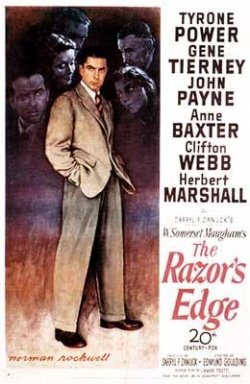
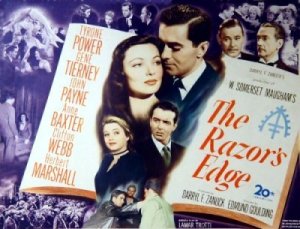
Razor's Edge (1946) ****


"Darryl F. Zanuck's Production of W. Somerset Maugham's Razor's Edge." Maugham's novel was originally serialized in Redbook from Dec 1943--May 1944. and The Razor's Edge became Tyrone Power's first role since his return from war and a three-year absence from the screen.

According to studio publicity materials, the production cost around $4,000,000 to film, used eighty-nine different sets and enjoyed the longest shooting schedule in the studio's history to date. A Jul 1946 HR news item notes that the film incorporated footage excerpted from a photographic expedition shot by the Bombay Film Co. in the Himalayan mountains. Gene Tierney's real-life husband at the time, Oleg Cassini, designed her costumes for the film. According to a studio publicity item, the wedding gown worn by Tierney in the picture was based on a sketch that Cassini had made for his and Tierney's wedding. The couple eloped, however, and so the dress was never made until the production of this film. According to a 6 Jan 1947 HR news item, the film broke all previous Fox box office records. The DV review called the picture a "dramatic triumph in every sense of the word." The film was nominated for an Academy Award for Best Picture and Best Art Direction, and Clifton Webb was nominated for Best Supporting Actor.
Anne Baxter's performance as Sophie earned her the Academy Award for Best Supporting Actress. *

*Source AFI

Did you Know??

Read "Life " Original Article of Razor's Edge Here

Saturday, May 20, 2006

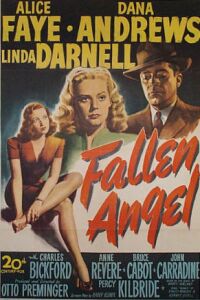
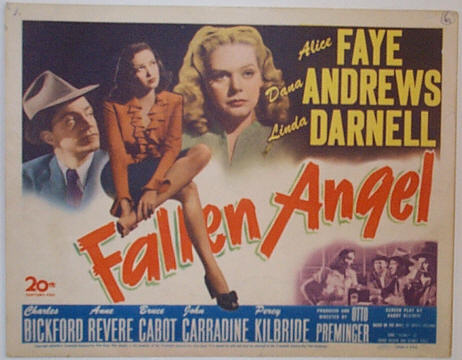
Fallen Angel *** 1/2

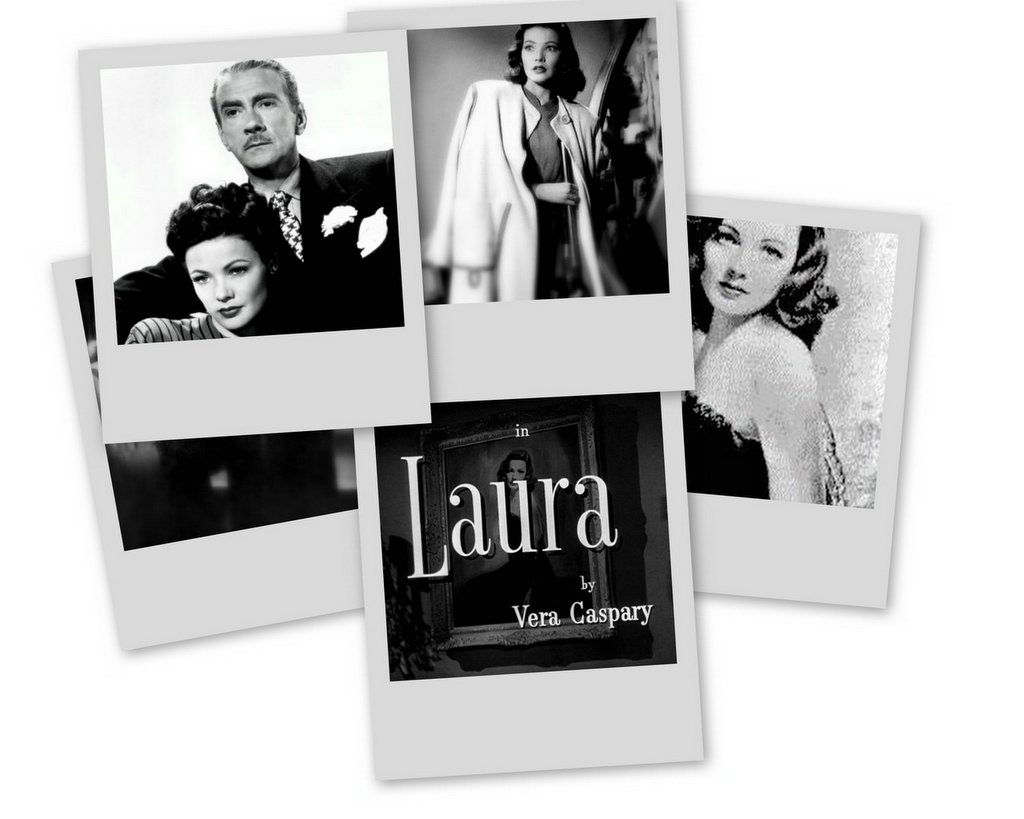
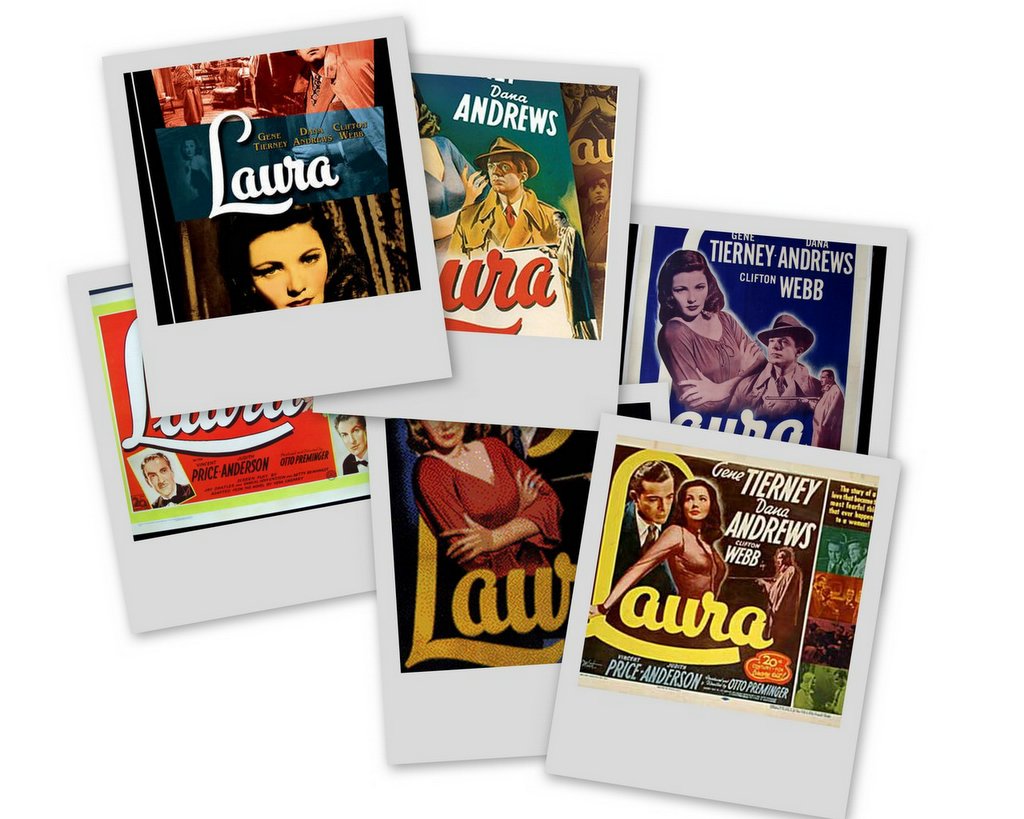
Fallen Angel is Otto Preminger's follow-up to Laura, another noir story of a beautiful woman and her effect on the men around her. In this case the beauty is Stella, played by Linda Darnell. Several reviews compared the picture to Laura , a 1944 Twentieth Century-Fox production that was also directed by Preminger, starred Dana Andrews, and featured music by David Raksin and photography by Joseph La Shelle.
Preminger liked long takes though the camera manned by the very expert Joseph LaShell (who also photographed Laura and River of No Return for Preminger, as well as My Cousin Rachel, The Apartment, and Billy Wilder's following three films) was not at all static. The black-and-white scenes look crisp and allow the actors to convey emotion.

The movie is not as relentless as Detour or as witty as Laura. It (especially the second half) is plenty melodramatic and
involves a change of heart I find highly suspect. It is better to look at than it is to think about. Many would say the same about Linda Darnell's "performance." Little as she was asked to do, she did less, yet was accepted again by Preminger (who wanted Lana Turner) in Forever Amber, and appeared in films directed by John Ford, Preston Sturges, and Joseph Mankiewcz during the late 1940. She must have had a "special" relationship with Fox magnate Daryl F. Zanuck.**

DId You Know??

According to modern sources, Alice Faye(who was Fox biggest star after Shirley Temple was angered when studio production chief Darryl F. Zanuck ordered her rendition of the song, as well as several of her dramatic scenes, cut from the picture in order to emphasize Linda Darnell's role. Consequently, Faye left Twentieth Century-Fox without fulfilling the rest of her contract, which called for the making of two more films. Fallen Angel was Faye's first picture since the 1943 film The Gang's All Here , (although she did make a brief singing appearance in 1944's Four Jills and a Jeep ); it was her first and only purely dramatic role; and was her last film until the 1962 picture State Fair , for which she returned to Twentieth Century-Fox. ** Stephen Murray toxic universe